

Mamdani’s Socialist Vision for NYC Is Quietly Building a Walled-Off Elite Enclave
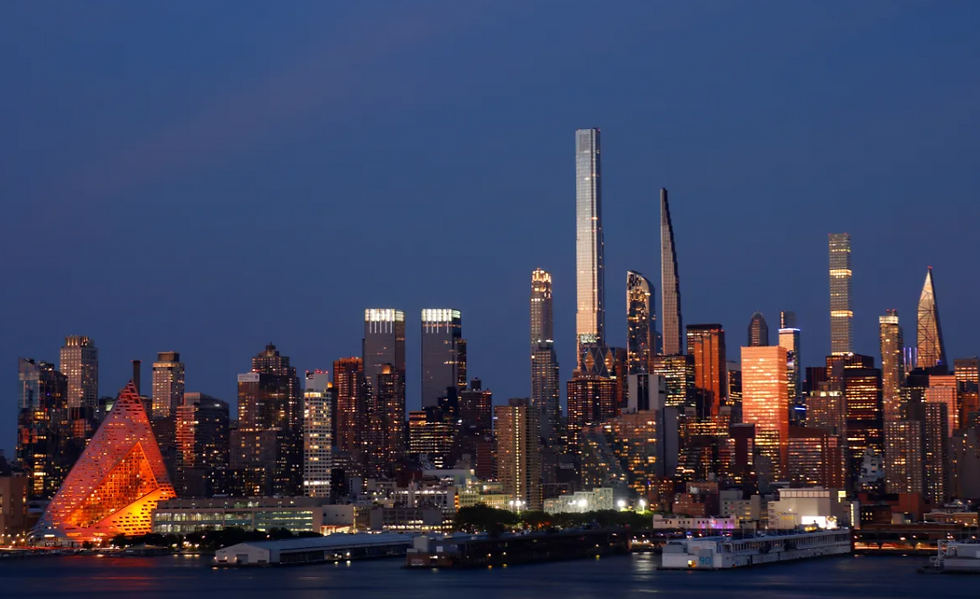
Mayor Zohran Mamdani came into office promising equity for all New Yorkers. Tax the rich, expand services, freeze rents, and make the city work for working people. It sounds compassionate. But the data and the incentives tell a different story: his policies are accelerating the very forces that will turn Manhattan into a surreal, high-income gated community—accessible only to the ultra-wealthy and a handful of deep-pocketed firms—while everyone else is priced out or pushed away.
We’ve already seen the early signs. In 2025, New York City lost a net 114,000 domestic residents across every income level. High costs, safety concerns, and cramped living space drove them out. Mamdani’s response? Double down. He is pushing a 2-percentage-point hike in the city personal income tax on earners over $1 million and a rollback of the Pass-Through Entity Tax credit. If Albany signs off, that’s roughly $4 billion in new revenue. If not, the fallback is already written into the preliminary budget: a 9.5 percent property-tax increase that will hit landlords and, inevitably, get passed on to tenants and small businesses.
Here’s the problem. The ultra-wealthy and the big corporate anchors can absorb these hits. Bank of America just signed the largest office lease in city history—a 20-year deal for its entire Bryant Park tower. AI firms are leasing trophy space in SoHo and Flatiron at record rates, paying premium rents and property taxes because they can. They stay for talent density and prestige. But their presence doesn’t lower rents for teachers, firefighters, or bodega owners. It doesn’t stock the shelves or clean the streets for the middle class.

Meanwhile, the people Mamdani says he wants to help are the ones getting crushed. Consider the doctor who spent years in medical school, built a practice, and finally crossed the $1 million threshold. He drives a nice car, owns a house that reflects his hard work, and keeps a small condo in Florida as a hedge. Under the new tax plan, he faces a sudden jump in his marginal rate on every dollar above $1 million. Many in his position will simply work less, shift more business to Florida, or leave entirely. The same math applies to small-business owners—bodega operators, dry cleaners, corner grocery stores—who already operate on razor-thin margins.
These aren’t remote-work jobs. You cannot dry-clean clothes from Texas. A dentist cannot fill a cavity over Zoom. A doctor often needs to see the patient in person because symptoms don’t always translate through a screen. Grocery shoppers want to judge the quality of produce and meat with their own eyes, not hope an algorithm got the order right. Customer service, already strained by high turnover and rushed hiring, only gets worse when businesses raise prices to cover higher rents caused by the property-tax ripple.
So what happens? The middle class and working residents—teachers, firefighters, nurses, shopkeepers—get squeezed by higher rents, higher grocery prices, and slower or strained public services. The ultra-wealthy respond the only way they can: they insulate themselves. Private security, private schools, helicopter pads, delivery everything. Manhattan becomes a daytime corporate enclave and a nighttime ghost town, walled off not by literal fences but by economics. The service workers who make the enclave function can no longer afford to live anywhere near it. The tax base narrows to a smaller group of high earners who can afford to self-insure against the city’s decline.

And here is the part that should worry every American: this is not just a New York story. The same socialist-style playbook—tax the productive, expand redistribution, ignore incentives—is being tested in other major cities. San Francisco, Chicago, Los Angeles, even parts of Philadelphia and Boston are watching the same exodus patterns. When high earners and businesses leave, the revenue hole widens. Politicians respond with more taxes on whoever is left. The middle class gets priced out. The ultra-wealthy retreat into private bubbles. The city hollows out. The dream of equity becomes a nightmare of elite capture.
Mamdani is not malicious. He genuinely believes that more government spending and higher taxes on the successful will create fairness. But incentives don’t care about intentions. When you punish the doctor who built the practice, the bodega owner who opens at 6 a.m., and the firefighter who risks his life, you don’t get a more equal city. You get a surreal, stratified one: a glittering enclave for the few who can afford it, surrounded by declining services and empty streets for everyone else.
New York has survived fiscal crises before. It can again—if it stops pretending that the laws of economics and human behavior can be repealed by good intentions. Before the walls go up for good, the city needs to remember a simple truth: you cannot tax and regulate your way to broad prosperity. You can only shrink the pie you’re trying to divide.


Comments