

The End of the Ayatollah: Could Iran Finally Break Free from Theocratic Rule?
Updated: Mar 4
Hey, readers—it's Lynn here, and if you've followed my coverage on Iran over the years, you know this topic hits close to home for me. I've poured countless hours into dissecting the Islamic Republic's grip on power, from its proxy wars to its brutal crackdowns at home. But recently, something shifted in my thinking: What if the key to real change isn't just swapping leaders, but scrapping the entire concept of the Ayatollah as Supreme Leader? It dawned on me during these chaotic weeks following Ayatollah Ali Khamenei's assassination on February 28, 2026, in a joint US-Israeli strike. With the role vacant and an interim council scrambling, the possibility feels tangible for the first time. Yet, as we'll explore, it's tied inextricably to dismantling the Islamic Revolutionary Guard Corps (IRGC)—and that's no small feat. We'll dive deep into why this matters, the generational pushback, parallels to the Shah's era, and the terrifying risks of a power vacuum akin to Afghanistan's collapse. This isn't just academic; it's about 85 million people yearning for a future beyond repression. Let's break it down.
The Roots of the Ayatollah System: A Revolutionary Invention, Not an Inevitability
To understand why eliminating the Ayatollah role could be transformative, we need to revisit its origins. The position of Supreme Leader—formally the "Guardian of the Islamic Jurist" under the doctrine of Velayat-e Faqih—wasn't a timeless Shia tradition. It was engineered by Ayatollah Ruhollah Khomeini during the 1979 Islamic Revolution, which toppled the Shah's monarchy. Khomeini argued that, in the absence of the hidden Twelfth Imam (a core Shia belief), a top cleric should wield ultimate authority to ensure the state adheres to Islamic principles. This fused religion and politics into a theocracy where the Supreme Leader holds veto power over elections, the military, judiciary, and foreign policy—above even the elected president.

No other country has replicated this exact model, even among Shia-majority nations like Iraq or Bahrain. Traditional Shia scholars often view Velayat-e Faqih as an innovation, not doctrine, preferring religious authority separate from state control. In Iran, it's enshrined in the 1979 constitution, making the Supreme Leader a lifetime appointee selected by the Assembly of Experts (a clerical body). Khamenei, who succeeded Khomeini in 1989, expanded its reach, turning it into a tool for hardline control.
But here's the passion point for me: This system has bred isolation, economic ruin, and human rights abuses. Women flogged for a slipped hijab, internet blackouts during protests, journalists jailed for criticism—it's a regime that toggles information and freedoms like switches. And with Khamenei's death, the interim leadership council (President Masoud Pezeshkian, Judiciary Chief Gholam-Hossein Mohseni-Eje'i, and Ayatollah Alireza Arafi) is holding the fort, but no successor has been named amid ongoing strikes and retaliations. Contenders like Khamenei's son Mojtaba or Ali Larijani are in play, but the vacuum exposes cracks.
Generational Rejection: Why Young Iranians Are Done with Theocracy
If there's one thing polls and protests scream loud and clear, it's that Iran's youth—over 70% of the population under 35—want nothing to do with this setup. Recent surveys from 2024-2026 by groups like GAMAAN show 70-80% rejecting the Islamic Republic outright, favoring a secular democracy instead. In one 2025 poll of 77,000 Iranians, only 11% backed the 1979 Revolution and Khamenei, with majorities calling for regime change or transformation. Even a leaked government poll found 72.9% favoring separation of religion and state.

The "Woman, Life, Freedom" protests since 2022, amplified in 2025-2026 amid economic collapse, have seen chants ditching both monarchy and clerics for a "democratic republic." Youth mock the system online, despite shutdowns, and view enforced religion as domination, not devotion. A "tsunami of atheism" is underway, with many seeing the Ayatollah as a symbol of corruption and conflict.
Hypothetically, even if some wanted a symbolic Ayatollah (like spiritual guides in Iraq's Najaf), the current theocratic version—enforcing morality police and proxy wars—is universally reviled among the young. They crave jobs, freedoms, and global integration, not isolation.
On X, as well as other social media, voices echo this: Users debate abolishing the Supreme Leader for a secular system, warning that naming a successor would just perpetuate the cycle. Opposition like the National Council of Resistance of Iran (NCRI) pushes a ten-point plan for a secular republic, explicitly dissolving Velayat-e Faqih.
The IRGC: The Backbone of Theocracy—Eliminate It, and the Ayatollah Falls
Here's the linchpin: You can't scrap the Ayatollah without dismantling the IRGC. Born from the 1979 Revolution as a "people's army" to protect the theocracy, the IRGC has morphed into a military-industrial behemoth with 150,000-190,000 personnel, controlling vast economic sectors and answering only to the Supreme Leader. It oversees the Basij militia for domestic repression and the Qods Force for proxy wars in Syria, Yemen, and beyond.
The IRGC enforces Velayat-e Faqih, infiltrating bureaucracy, clergy, and society. Analysts warn that Khamenei's death won't collapse the regime because the IRGC is the real power—potentially seizing control in a vacuum. Opposition plans call for its full dissolution to pave the way for democracy. Without it, the Ayatollah role loses its enforcer, making abolition feasible via constitutional overhaul.
Echoes of the Shah: Authoritarianism Then and Now, with Trump Parallels
I'm heartbroken that Iranians were sold regime change in 1979 as a panacea, only to trade one autocracy for another. Under Shah Mohammad Reza Pahlavi (1941-1979), Iran boomed economically—strong rial, Western alliances, women's rights advances—but at the cost of repression via SAVAK secret police, corruption among elites, and neglect of rural grievances. The 1953 CIA-backed coup ousting Prime Minister Mossadegh fueled resentment, mirroring today's foreign meddling fears.
The current regime amplifies these flaws: Economic mismanagement (rial at 1.4 million to the dollar), elite corruption, and SAVAK-like brutality via IRGC. Parallels to Trump? Both face(d) elite resistance, media smears, and accusations of authoritarianism amid populist support—think Shah's Western backing vs. Trump's "America First" echoing Iranian nationalism.
But regime change promises often flop, as 1979 showed: From monarchy to theocracy, problems persisted.
The Vacuum Nightmare: Afghanistan 2.0?
A full reset sounds ideal, but the risks are gut-wrenching. Khamenei's assassination created a power void, with analysts warning of civil war, IRGC fragmentation, or hardliner takeover. Like Afghanistan post-US withdrawal in 2021—where Taliban filled the gap amid chaos—Iran could see armed factions vying for control, dispersing arsenals and sparking slaughter. No strong opposition like Reza Pahlavi (Shah's son) is positioned to unify without protection, and external strikes might rally nationalists.
Prolonged conflict could birth a "garrison state"—militarized, paranoid, and more aggressive. Yet, with public sentiment against theocracy, a managed transition (protests + foreign pressure) might avoid implosion.
A Path Forward: Passion Meets Pragmatism
I'm passionate because Iran's people deserve better than cycles of false hope. Eliminating the Ayatollah via IRGC dissolution could usher in a secular republic—free elections, gender equality, economic revival. But it requires internal momentum, not just external bombs, to sidestep Afghanistan's fate. As social media discussions note, history's regimes fall when they seem eternal.
Watch the Assembly of Experts; if they delay a successor, the window widens. What do you think, readers? Is a full reset worth the risk? Drop thoughts @NewsWecu. Stay informed—freedom's fight is ours too.
UPDATE: As of the Writing of This Article (March 3, 2026 – Late Afternoon CST)
Iran's attempt to name a successor to the late Ayatollah Ali Khamenei collapsed in dramatic fashion today. The Assembly of Experts—the 88-member clerical body constitutionally responsible for selecting the Supreme Leader—convened (or attempted to) in Qom to deliberate and vote on a replacement. Iranian state-affiliated outlets like ISNA, Fars, and Tasnim initially reported the process advancing, with some claiming it had entered the "final vote" stage or that voting had shifted to remote methods due to escalating security threats from ongoing US-Israeli strikes.
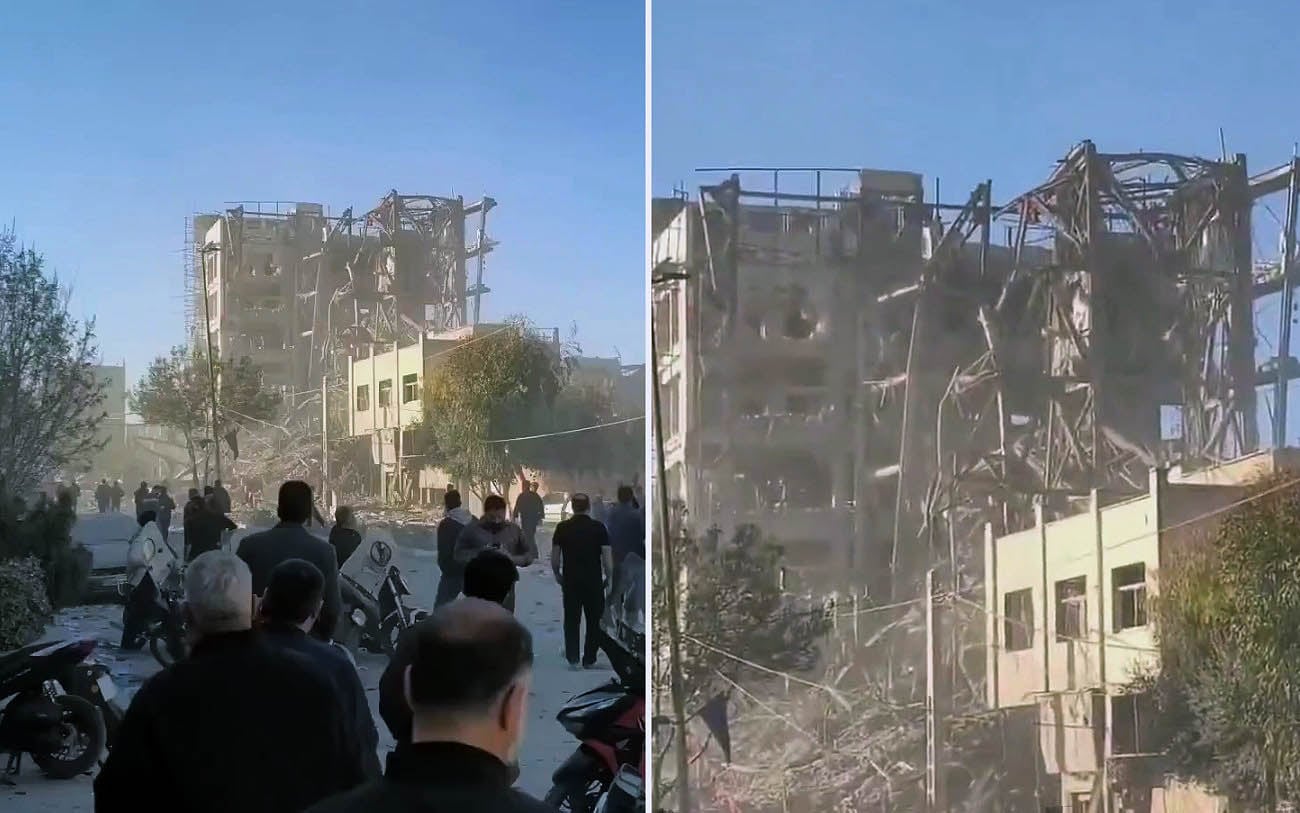
That process was violently interrupted. Multiple credible reports—from the New York Post, Times of Israel, Jerusalem Post, Fox News, Bloomberg (citing Kan News), and Israeli defense sources—confirm an Israeli airstrike hit the Assembly's building in Qom while members were reportedly gathered or in the midst of proceedings. Sources describe the strike occurring "as they were counting votes" or during the meeting itself, with the building "flattened" or severely damaged. Iranian media acknowledged the attack on the Qom site (and earlier hits on Tehran offices), but downplayed casualties or denied a physical meeting was underway at the exact moment.
No successor has been announced. The interim three-person Leadership Council—President Masoud Pezeshkian, Judiciary Chief Gholam-Hossein Mohseni-Eje'i, and Ayatollah Alireza Arafi—continues to hold de facto authority under Article 111 of the constitution. Some Iranian officials insist deliberations continue remotely and a pick could come "soon," but the strike has clearly paralyzed the formal mechanism designed to perpetuate the theocracy.
This development underscores the core argument of this piece: The Ayatollah system, already rejected by Iran's younger generation amid protests, economic despair, and enforced repression, is now operationally crippled by external pressure. If the Assembly can't even meet safely to install a new guardian jurist, the doctrinal pillar of Velayat-e Faqih looks more vulnerable than ever. Hardliners and the IRGC may step in to fill the void—potentially accelerating fragmentation—but it also creates space for the secular, democratic reset many Iranians demand.
At the same time, the risks loom larger: A prolonged inability to reconstitute clerical leadership heightens Afghanistan-style chaos scenarios—dispersed power, factional infighting, and no clear authority amid war. Oil prices are spiking, regional tensions are boiling, and the generational push for freedom hangs in the balance.
We'll update as developments break overnight—stay tuned, and share your thoughts
@NewsWecu. This could be the moment the regime's unique model unravels for good... or hardens into something even more militarized.


Comments