

The Growing Appeal of "Democratic Socialism": What the Polls Show, What Drives It, and Where History Suggests It Leads
- Lynn Matthews
- Jun 23
- 4 min read
Support is rising among key groups amid economic frustrations, but the rhetoric of "equity" often echoes past movements that delivered new elites rather than broad prosperity.
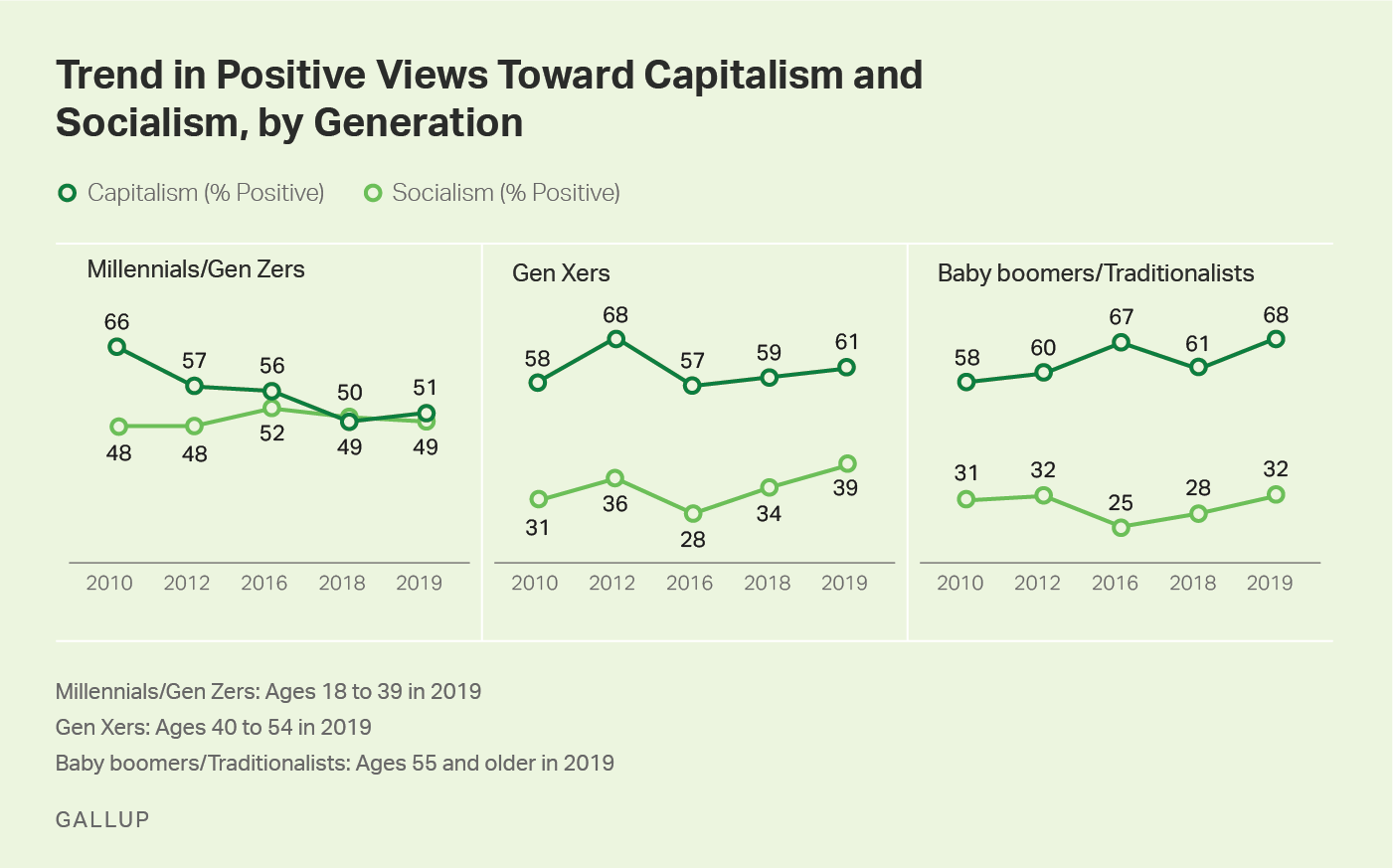
Recent polling reveals a clear generational and partisan divide in attitudes toward socialism in the United States. While overall positive views of socialism have remained steady around 39%, capitalism's favorability has slipped to 54% (down from 60% in 2021), according to Gallup's August 2025 survey. Among Democrats, 66% now view socialism positively compared to just 42% for capitalism. A Fox News poll in March 2026 found a record 38% of voters saying it would be a good thing for America to move toward socialism—up from 32% in 2022 and 18% in 2010. Support is notably higher among younger adults and those identifying as liberal or progressive.
What’s Driving the Shift towards Socialism
Several interconnected factors explain the trend:
Economic pressures on younger generations: Many Millennials and Gen Z entered adulthood facing the aftermath of the 2008 financial crisis, high student debt, rapidly rising housing costs, and a perception that the system rewards the already-wealthy disproportionately. Polls consistently link these concerns to greater openness to redistribution-focused policies.
Cultural and educational influences: Terms like "equity" have been reframed in schools, media, and online spaces to emphasize equal outcomes rather than equal opportunity. This resonates with those who view success as largely unearned or exploitative.
Partisan polarization: Democratic support for socialism has grown steadily over 15 years, while Republican opposition remains strong. For some, the label serves as a protest against frustrations with the status quo rather than a detailed economic blueprint.
These drivers reflect legitimate grievances about affordability and opportunity. However, the framing often goes beyond practical fixes.

The Rhetoric of "Equity" and Division
Prominent advocates frequently describe their vision using appealing language—"equity for all," "fair share," and ending "greed." In practice, this often translates into punitive measures aimed at high achievers and accumulated wealth, such as annual wealth taxes on billionaires or billionaires themselves.
Critics argue this approach does more to foster resentment and division than genuine broad-based prosperity. By framing extreme success as inherently problematic, the rhetoric can turn economic debate into moral condemnation. Historical revolutions frequently followed a similar pattern: eloquent promises of justice and equality that unified diverse groups, followed by consolidation of power by a new elite.
Historical Parallels:
Mao’s Revolutionaries and the Iranian Revolution
In Mao Zedong’s China, revolutionary rhetoric centered on equality, ending exploitation, and empowering the masses. The result was centralized power, the Great Leap Forward famine, the Cultural Revolution’s chaos, and the emergence of a privileged party elite that enjoyed luxuries unavailable to ordinary citizens.
The 1979 Iranian Revolution offers another instructive case. A broad coalition—including leftists, liberals, and Islamists—rose against the Shah’s autocracy with promises of justice, freedom from foreign influence, and a better life for the people. Once the Shah fell, factions competed for control. Ayatollah Khomeini’s group ultimately prevailed, sidelining former allies and establishing a new theocratic ruling class that enforced its own hierarchy and ideology. Many who joined for idealistic reasons later felt the revolution had been captured by those seeking power rather than shared prosperity.
In both cases, the language of equity and anti-elitism proved effective for mobilization—but the systems that emerged concentrated power and created new forms of privilege. Economists like F.A. Hayek warned that centralized economic control tends to bring "the worst to the top," as enforcing comprehensive plans requires coercion and rewards those willing to wield it.
Where This Path Often Leads
History and economics suggest several recurring outcomes when punitive redistribution and heavy state control become central:
Reduced incentives and slower growth: Wealth taxes and aggressive targeting of success have led to capital flight and lower investment in multiple European countries; many were repealed for delivering disappointing revenue relative to costs.
New hierarchies: Power shifts from market success to political favor. Those who control the redistribution apparatus often end up with disproportionate influence and benefits.
Division over unity: Framing wealth creators as villains can deepen social rifts rather than build the broad consensus needed for sustainable progress.
Nordic countries—frequently cited as models—are market economies with strong private property rights, competitive businesses, and high economic freedom rankings. They fund generous welfare through broad-based taxes, not by demonizing or punishing the successful. They reformed earlier high-tax experiments when growth suffered.
Innovation vs. Punishment: The Elon Musk Example
Consider Elon Musk. Through companies like Tesla and SpaceX, he has driven advances in electric vehicles, reusable rockets, and related technologies—creating thousands of jobs and substantial value for shareholders, employees, and consumers. Critics including Senators Bernie Sanders and Elizabeth Warren have strongly condemned his wealth, calling his rise to trillionaire status an "absurdity" and pushing wealth taxes in response.

Musk’s success stems from high-risk innovation and execution in competitive markets. Punishing such outcomes risks discouraging the very entrepreneurship and investment that generate jobs, technological progress, and tax revenue. History shows that societies thriving on broad prosperity reward value creation more than they penalize it.
Moving Forward
The appeal of "democratic socialism" taps into real concerns about costs of living and fairness. Yet the combination of punitive rhetoric, historical patterns of elite capture, and economic incentives points to caution. Systems that demonize success while expanding state control have repeatedly produced division and unintended concentrations of power rather than the equitable abundance promised.
A more productive path focuses on removing barriers to opportunity—such as housing supply constraints, education costs, and regulatory favoritism—while preserving the incentives that drive innovation and growth. The data and history suggest that broad prosperity comes from expanding the pie through voluntary exchange and ingenuity, not from redistributing resentment.


Comments